North American Tour 2026
The Charlatans UK
Frankie Rose
The Castro
San Francisco,
CA

Another Planet Entertainment
Live music in the Bay Area and beyond
This event is all ages.
All doors & show times subject to change.
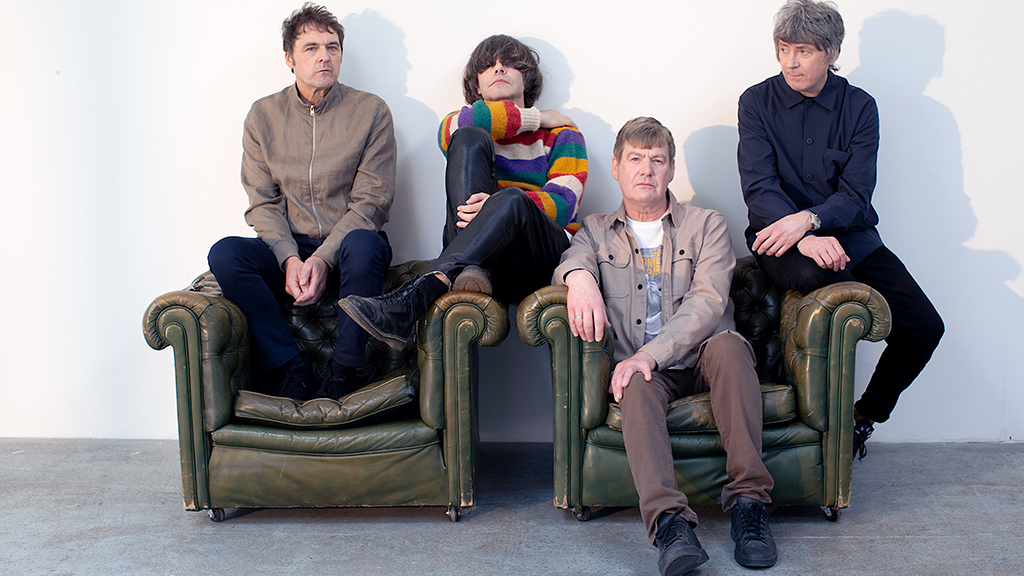
One of the best loved UK bands of the last four decades, The Charlatans’ career spans 13 albums, 22 Top 40 singles, three Number One albums and era-defining anthems like ‘The Only One I Know’, ‘North Country Boy’ and ‘One to Another’. We Are Love launches a bold new era, one that finds them at peace with their past whilst looking forward to a bright future.
Lead single ‘We Are Love’ is a celebratory statement of intent, an urgent, limber, clattering love song to the human race. Propelled forward by driving drums and anthemic guitar, frontman Tim Burgess describes it as “like an open top car ride in the credits of your favourite movie driving along the coast to somewhere amazing.” One of the first tracks to emerge from the album, it became a pathfinder for the record, as Collins explains: “Early on we thought it felt right. And it turned out that way: first single, title track, second song on the album. And things started forming around We Are Love. There was a certain energy to it that drove us forwards.”
An eight year gap between albums is the longest ever for one of the UK’s most enduring bands. A combination of covid, solo projects, life’s complexities and the fact that its five members – Tim Burgess (vocals) Martin Blunt (bass), Mark Collins (guitar), Tony Rogers(keyboards) and Pete Salisbury (drums) – live scattered across Europe, meant that it took longer than usual for the stars to align at the right place, right time, right vibe. They took the time to carefully select a recording A-team of production duo Dev Hynes (aka Blood Orange and Lightspeed Champion) and Fred Macpherson (Spector, Rachel Chinouriri, Jessica Winter, Taahliah), plus legendary producer Stephen Street (The Smiths, Blur, The Cranberries), alongside a list of engineers, mixers and collaborators that reads like a who’s who of alt rock greatness. The result has been well worth the wait.
Recorded at two places that are totemic in The Charlatans’ history – Rockfield in Wales and their own Big Mushroom space in Middlewich, Cheshire – Burgess cites hauntology and psychogeography as two concepts that swirled in his head as the band dug into the album making. For one thing, their return to storied farm studio Rockfield for the first time in almost 30 years – since they made fifth album Tellin’ Stories – was an important step. As a band they hadn’t been there since keyboard player Rob Collins was killed, in the middle of that album’s sessions, in a car crash at the bottom of the track leading to the farm. Throughout the record you can hear The Charlatans’ awareness of the stuff that’s made them – the highs and the lows; the desire to honour their own mighty legacy, whilst not being defined by it. A career-long drive to be progressive and innovative.
Tim Burgess explains: “The whole idea of hauntology and psychogeography is represented by us going back to Rockfield, where so much history has happened for The Charlatans. That was important as a way of honouring every member who’s played in the band. So we’re honouring ourselves, our past, feeling that energy and reincarnating it, doing something fresh, brand new.”
This introspection brought home the fact that love is the glue that has held The Charlatans together for so long, and that’s reflected in the 11 tracks that make up this forward-thinking, future-facing album.
We are The Charlatans.
We Are Love.
After spending years as a major presence in Brooklyn’s thriving music scene, Frankie Rose relocated to her familial home of Los Angeles for 18 months. Frankie’s intent was to establish yet another moment in her storied indie rock métier. Gradually, she found herself short on sleep, funds, and optimism. “I moved to L.A., drama ensued and I ended up on a catering truck. I was like, how can this be my life after being a touring musician and living off of music. I had really lost my way and I thought I was totally done.”
Through sleepless nights of listening to broadcaster Art Bell’s paranormal-themed archives, Frankie’s thoughts had turned to “who am I, I’m not cut out for this business, it’s not for me.” She continues, “I was literally in my room in L.A., not knowing how I was going to get out. But out of it all, I just decided to keep making music, because it is what I love and what I do – regardless of the outcome.”
Towards the end of her time spent in Los Angeles, Frankie reached out to Jorge Elbrecht (Tamaryn, Gang Gang Dance, Violens) and began sketching what became the basic outline of what felt like a new album. Then, rather fortuitously, Frankie ended up back in Brooklyn with the realization that “in the end, I’m on my own. I have to do these things on my own.”
The months that ensued meant basically working with no budget and finding ways to record in-between days. This time enabled Frankie to experiment musically with a variety of people that ultimately changed the way she worked. “I got a lot of input from people like Dave Harrington (Darkside), who was helpfully reconstructing the songs, adding dynamics and changing up the rhythms.”
The result of this existential odyssey is Cage Tropical, Frankie’s 4th album. It is awash with vintage synths, painterly effects pedals, upside down atmosphere and reverberating vocals. It evokes a new wave paranormality of sorts that drifts beyond the songs themselves. “My references aren’t just music,” says Frankie, “I love old sci-fi. They Live is one of my favorite movies ever, same with Suspiria. 80’s sci-fi movies with a John Carpenter soundtrack, with silly synths – that makes it into my file, to the point that I’ll write lyrics incorporating that kind of stuff. It’s in there.”
Beginning with the shimmery, cinematic and percussive sparkling of the album’s opening track “Love in Rockets,” the song’s refrain of “a wheel, a wheel of wasting my life; a wheel, a wheel of wasting my time” immediately alludes to those darker circumstances that led to the creative origins of Cage Tropical. “It’s all essentially based on what happened to me in Los Angeles and then a return to Brooklyn,” says Frankie. “Misery turned into something good. The whole record to me is a redemption record and it is the most positive one I’ve made”
“I feel like I am finally free from worrying about an outcome. I don’t care. I already lost everything. I already had the worst-case scenario. When that happens, you do become free. In the end, it’s about me rescuing myself via having this record.”