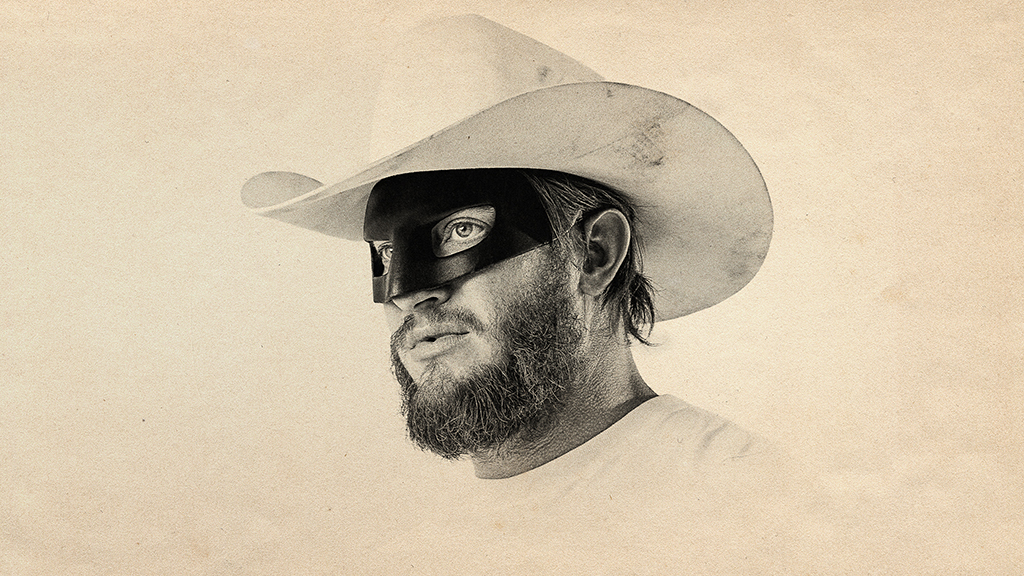
Orville Peck
Abbie Callahan
Channel 24
Sacramento,
CA

Another Planet Entertainment
Live music in the Bay Area and beyond
This event is all ages.
Presale begins Thursday, July 30th at 10am!
(password = townie)
The general on sale begins Friday, July 31st at 10am!
For an additional fee, you can opt in to upgrade your experience to include exclusive access to Studio 24 before, during and after the show! Upgrade here. Please note all Studio 24 upgrades are subject to availability.
All doors & show times subject to change.
The first voices you’ll hear on Orville Peck’s fourth studio album are Emmylou Harris, Noah Cyrus and Allison Russell, harmonizing bluegrass on “Prologue (Eulogy Of A Man Turned Mule)” as they introduce Mule, a sweeping, chronological epic that narrativizes the year 2023—or, as Orville knows it, the year he “hit rock bottom before finally getting sober.” The image is stark and cinematic: three iconic musicians from different generations and genres within country music, “standing over a metaphorical coffin with me inside of it, singing about how much of a waste of my life was, as if I had died in the Bowery Hotel the night I overdosed in 2023.”
Flash back to three years ago: it’s January, and Orville’s just returned home from a trip with his partner that culminated in their breakup (and a promise to return to each other later that fall for a check-in, opening the for what each hoped would be a substantial period of growth and time apart). Single and alone in Los Angeles, as we find him on “Big ‘Ol House,” Orville gives in to his destructive impulses: drinking, partying, drugging. “I’d be sitting alone inside my house feeling like a prisoner, trapped inside something I’d earned and something I never thought I would have growing up,” he says. “Yet I was feeling like I could never escape what had become this prison for myself to act out and be depressed in.”
Where Pony, Bronco, and Stampede wove together bits and pieces of Orville’s life and learnings, Mule takes a linear (though not always straight) path through the hardest year of the artist’s life. Its title (also the album’s closing track) gets its name from a simple place of inspiration and comparison: “To me, the image of a mule is somehow misunderstood,” Orville says. “A mule is the offspring of a horse and a donkey bred specifically for work. Mules cannot reproduce. They are trapped between two worlds, maybe always trying to figure out which one they belong to. They are known allegorically for being hard-working, stubborn, a burden, resilient. And it’s also a nickname for those who traffic drugs. Mules work in their own time and in their own way: built by choice and yet never to be recreated. Singular and alone. I think that it is hard to be a mule… but I’m also glad that I am one.”
After “Big ‘Ol House,” we’re thrust into “Already Gone,” which, on its surface, appears joyful and carefree—but its lyrics about being thrown into ‘the slammer” stand in stark opposition to its hand-clapping melodies. “At the time, I didn’t believe I had a problem, but I begrudgingly agreed to go to rehab at the behest of my team,” he remembers. “I was in such a chaotic, egotistical state of mind that I didn’t take it seriously, which is why ‘Already Gone’ is one of the most upbeat, fun songs on the album, but it’s actually filled with a lot of darkness.”
Orville calls “Rehab Blues” his “hokum” song, referencing the country western sonic trope that historically combined comedy, wit, and poignant lyrics. “When I was in rehab in California, I wished that I could die or leave or escape—I just did not want to be there,” he says. The song’s first verse immediately fulfills its hokum ambition: “They’re always knocking at the door / You get a bed but you use the floor / They watch you take the pills / No thrills / No TV after 9,” he croons before imagining evening news stories about his untimely demise. “I wanted to give a comedic spin given where my head was at. The bridge especially is quite funny, where my fantasies of escaping present themselves as an almost circus-like eruption of friends and ridiculous instruments causing a scene in my mind.”
With rehab done, Orville’s journey was only just beginning. “I didn’t leave sober,” he says. “I left thinking that now at least I had control of my drinking and that I wasn’t an alcoholic, that I was smarter than that, that I was better than other people that had gone to rehab—or at least that I was different. So I went straight back to partying and being insane.” That story gets told in all its messy glory (and embarrassment) on “Ring The Bell,” the chorus of which finds Orville singing about “another reckless man / with a masterplan / to get himself kicked out of hell” and how “if you get blacked out / you don’t have to pout / there’s another round that’s ready to go.” (“Full peak chaos era,” Orville jokes.)
“Blue Skies” were certainly ahead, though not right away, and not in the way he sings about on the song of the same name. Slow, drawn-out percussion and dramatic strings underscore Orville’s lush harmonizing and howling as he croons about (as he describes it) “descending back into darkness, even darker than ever before I went to rehab” before a discordant crash-out and crescendo. Rock bottom comes one night in downtown New York the summer of 2023 in the form of “The Fall,” chronicling the moment Orville knew—based on how his choices had begun to impact those closest to him—that a change needed to come, and quickly. “The lyrics are mostly about yearning for missing everything that I had lost in my life at that point: my relationship, my career, and my sanity,” he says. “But this song is also about finding the clarity that I needed to make a change, clarity that also involved healing some of the resentment I felt towards my ex and myself; this song is the turning point in the album that changes for the better.”
Mule’s B-side picks up with “Cowboy Heart,” a jangling, sprawling long hard look in the mirror with its title lyrics echoed back to him by his mother. “It starts with me walking down Hollywood Boulevard with seemingly everything I ever wanted in my life: a big career, fans that love to buy my music, money for the first time in my life, a home, a car, and so much more,” he says. “But then I realize I’ve never been more lost. At the time, I finally decided to get sober. I started to go to meetings, and I got myself a sponsor. The clarity that sobriety gave me not only opened up a lot of work that I had to do in order to get my relationship and my career back, but surprisingly to me, opened up a lot about what I’ve been struggling with in terms of being Orville Peck.”
“Cowboy Heart” also cracks open Mule’s other throughline: the duality of being Orville and the man behind the mask at the same time.
“The Breeze, The Grass, The Mourning Dove And Me,” an “impatient bluegrass shuffle,” continues his trajectory, capturing a moment that year when Orville felt “like the best version of myself: healthier, happier and more grounded than I’d ever been in my entire life.” Here, the bluegrass chorus emerges from the shadows, leading the charge as he uses memories of childhood in South Africa (“despite moving around, the one thing that has always felt like home are the sounds, the smells, and the sights of being out in the bush”) to help convince his ex that things can be both unfixable and undeniable in equal measure.
“Run Out of Road” serves as a warning of sorts to “fellow avoidant personalities,” Orville says, “that their chances with somebody might run thin and that the road that they continue to run down, may one day run out.” Its chorus plainly lays out its truth: “Don’t come running back to me / when you run out of road / expecting I am still behind / the door that you slammed closed.” “At this point, “I’m sober and healthy, I’ve met back up with my partner, and we are on our way to getting back together—but I found myself with my newfound confidence wondering if I even wanted to be back in a relationship.”
A partner song follows in “Too Little, Too Late,” an “empowering indie sleaze banger” that traces the reality of a partner returning to the arms of another who may have moved on by the time a reunion was even remotely on the table. “It encapsulates what it feels like to be finally secure with who you are,” he says. On the 11 o’clock number, “War Of The Worlds,” a vocal stacked Orville—clearheaded, sober, and calm—tackles the duality of man versus artist once more. “There’s a strange thing that happens when you become successful or famous or whatever you wanna call it,” he says. “There’s so much energy coming at you from people who don’t actually know the real you but have assumptions about who you are, who they want you to be, how they want you to appear, and what they want you to do. I didn’t know for a long time that I was too sensitive and poorly equipped to navigate that world and that it wore down a lot of my self-esteem and my peace. I reckon with that solitary tug-of-war in this song.”
Orville lands the plane on “Mule,” a gentle mantra that circles back to the album’s opening, more simplistic bluegrass melodies. “It’s an observation that things are fragile and that any of us can lose the things we love most in life if we’re not careful or not looking out for ourselves,” he says. “In a lot of ways it’s also a thank you to those who were with me through this period, and also an empathetic hand toward myself to remember how far I’ve come and how much work it took and will always take. It is also a reminder to people that even when someone looks like they have it all together, you never know what they might be going through.”
In its 13-song journey, Mule further cements Orville Peck’s singular lock on songwriting, storytelling, and song-making in this industry. Its depths reward multiple revisitations; its melodies and harmonies will continue to surprise and amaze with each repeated listen. Mule might find Orville, at times, at his lowest, but it finds him not only picking up the pieces, but finding a better Orville along the way.