Scaring Strangers Tour
Blondshell
The Castro
San Francisco,
CA

Another Planet Entertainment
Live music in the Bay Area and beyond
This event is all ages.
A note from the artist:
Hi! I can’t wait for tour and to sing these new songs with you. It means so much to be able to share the music and see you in person. Circumstances outside of our control have made it necessary to shift some dates around and I’m so sorry for any inconvenience that might cause. I know how much it takes to make it to these shows. Please know I’ll be doing the best I can to make these shows as special as possible.
Really looking forward to it.
Xxx
Sabrina
All previously purchased tickets will be honored for the new date.
All doors & show times subject to change.
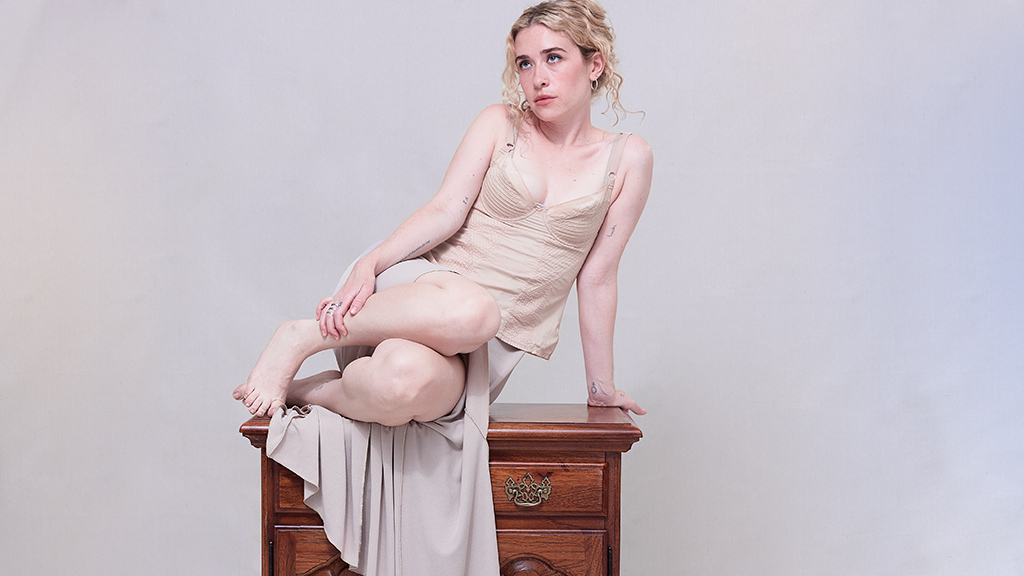
On her third album as Blondshell, Sabrina Teitelbaum is digging in. After introducing herself as a vital new voice in rock on 2023’s Blondshell and 2025’s If You Asked for a Picture — filled with loud-quiet guitars and whipsmart songwriting that earned her global acclaim (“an alt-rock supernova.” – NY Times) — her third record, Violins, goes deeper. Teitelbaum now has the freedom to say exactly what she wants, how she wants. “I felt like I didn’t need to overexplain anything, like I can trust the people listening more,” Teitelbaum says. “It feels like every time I make a record, I get closer to making the thing that I really want to make.”
With its evocations of grandeur, drama, tragedy, and skill, Violins is an appropriate title for an album that spends its 11 tracks asking how we balance the world’s violence with its beauty. Teitelbaum’s songs are satisfyingly-structured as ever, with virtuoso hooks, swelling guitars, and telling lyrical nods to Leonard Cohen and Pavement. Pulling in fresh influences—Gang of Four and Teenage Fanclub’s singular tones, The Go-Betweens’ indie-pop precision, Sade’s calming synths—Violins carries you like a wave.
“This record’s heavy in a way,” Teitelbaum says, though her songwriting breathes anew. “It’s gotten a little bit less literal,” she says. “There’s more imagery. But my main goal with this record was to have songs that hit hard. I wanted big lead lines.” Three albums on, Teitelbaum’s working relationship with producer Yves Rothman has fully locked in—fleshing out the demos of songs Teitelbaum wrote on her own, then recording live with the band. “I felt like I wasn’t walking in the dark anymore,” Teitelbaum said of her increasing studio fluency. “I spend more time with Yves than almost anybody—we just have such an efficient working relationship.”
Previous Blondshell albums used romantic relationships as prisms to confront power, addiction, and body image, augmented with dry wit and nonchalant humor and confident scream-along choruses. On Violins, Teitelbaum explores these subjects without “the veil of bad romantic relationships,” she says. With more maturity, Violins addresses themes of violence, religion, and troubled friendships, taking creative lyrical liberties without sacrificing catharsis.
The daydream “Lucky” captures a dually solemn and buoyant energy. In a sunny, insomniac haze, Teitelbaum sarcastically pushes herself to express gratitude—“I got lucky, I feel beautiful and rested”—and names small pleasures (a Dublin cafe, lemon cake, her late mother’s necklace) even as they exist in her mind alongside images of a world on fire, and the weight of her own past. “She’s alive in my memory/She said that she had cancer/The truth is too complex for a kid,” Teitelbaum sings disarmingly in the second verse, glimpsing a deep-rooted rupture. The anthemic “Heart Has to Work So Hard” uses filmic exposition to describe a vexed-but-enduring friendship with a person who is struggling: “I think that it’s brave you choose to live,” Teitelbaum sings in her tactful, powerhouse alto. She approaches this subject more delicately on the biting acoustic song “New Shape”: “Banquets and pearls/Alone at concerts,” goes its opening line, contextualizing a relationship that finds her “Cutting up my soles/Walking on your eggshells.”
A mind-body tension flows through Violins. Teitelbaum writes about the body with her characteristically clever finesse on “Two Fried,” using a food metaphor involving eggs to revel in the feeling of simply liking her figure; on “New Age Trojan Horse,” she sings bluntly about periods, and the supposedly enlightened men who find them repulsive. “I care to stick to you like a clot,” she sings elsewhere, on “Stone Fruit,” another corporeal metaphor on a song that underscores how the body and mind are inseparable. Alongside these somatic inquiries, “Sea Legs” invokes the spiritual, exploring a personal relationship with a higher power not through organized religion but in the makeup of one’s earthly life. The song ultimately exalts the things and people she loves – the rain, harmony, her boyfriend – as realer deities.
The titular opening track is Violins’ North star. On the chorus, Teitelbaum puts music to an unassuming, everyday piece of dialogue — “It’s not overnight / It takes all my focusing / ‘It’s like watching paint’ / Wait, what’d you say?” — to capture how true healing from trauma takes a lifetime, but its resonance extends to anyone clawing their way towards growth that requires patience. Someone else might not understand (might even find the process as boring as watching paint dry), but the song is powered by the conviction of a person who knows that a good life is worth fighting for. As a 29-year-old staring down her Saturn Return, having gotten sober at 22, Teitelbaum knows this dynamic well—she spent her 20s feeling out-of-step from her peers (“We’re not like our friends at all,” she sing on “Reinstall”) but the wisdom of her decisions shines through in her eloquent writing.
At the end of Violins, “Fur Elise” closes the album by gesturing backwards toward a beautiful, simple classical piano song that Teitelbaum learned in her youth. Blondshell’s “Fur Elise” narrates the crosshairs of growing up and not knowing exactly how to, turning on a deliberately wonky central metaphor: walking down the aisle to “Fur Elise,” fully aware that no one would actually get married to it. The mismatch is the point. “You’re trying to figure out what you want your life to look like, and what you want playing at your wedding, but you don’t even know where to start,” Teitelbaum says. “You’re picking the wrong song.” Growth, self-possession, and the ongoing process of healing might seem to another person like “watching paint dry,” as she sings on Violins’ opener. But on “Fur Elise,” she puts forth a statement-of-self on her own terms: “Paint a wall with the things you want spoken out loud / And you get the choice to forget / And you render art / And the truth of it is separate” – a beguiling truth in itself, and a path forward.